The Hidden Costs of Using Multiple Business Systems
In the highly competitive commercial hubs of Nairobi, Mombasa, and Kisumu, modern business leaders face intense pressure to scale rapidly while maintaining lean, efficient operations. As organizations transition from small startups into mid-sized enterprises, their operational complexities grow exponentially. To keep pace, many executives adopt software solutions piece by piece: an off-the-shelf accounting package for the finance team, a standalone Point of Sale (POS) tool for retail outlets, a separate inventory application for the warehouse, and a disjointed Customer Relationship Management (CRM) tool for the sales reps.
While this piecemeal approach appears to solve immediate operational bottlenecks, it introduces a dangerous phenomenon known as "software sprawl." In sectors like wholesale distribution, retail, and manufacturing, relying on fragmented systems eventually generates severe hidden costs that erode profit margins, stifle productivity, and obscure critical business visibility. For businesses steering through the nuances of the Kenyan economic landscape, achieving true digital transformation Kenya requires moving away from patchwork applications and embracing unified ERP software Kenya. Understanding the systemic impact of fragmented software is the first step toward building a resilient, scalable enterprise layout.

Data Silos and the Exhausting Tax of Manual Reconciliation
When distinct departments utilize isolated systems, information becomes trapped within functional silos. For a Kenyan wholesale distributor, this means the sales team might log a massive customer order in their standalone CRM while the warehouse team remains completely unaware of the transaction because their inventory application lacks real-time synchronization. Consequently, sales professionals unknowingly promise stock that has already been committed to another client, or worse, items that are entirely out of stock.
To fix these data gaps, organizations typically resort to extensive manual data entry and reconciliation. Finance and operations teams find themselves spending days exporting CSV files from one system, manipulating data within Microsoft Excel, and manually importing it into another. This manual overhead represents a significant drain on human capital. Employees spend precious hours fixing data discrepancies instead of focusing on strategic business growth.
Furthermore, human intervention inevitably introduces errors. Typographical mistakes, duplicate entries, and omitted transactions corrupt data integrity, leading to inaccurate tax reporting, flawed inventory valuations, and strained relationships with suppliers. In an era where agility determines market leadership, relying on slow, error-prone manual data transfers puts a business at a severe disadvantage against digitally integrated competitors.

Blind Decision-Making and the Absence of Unified Business Analytics
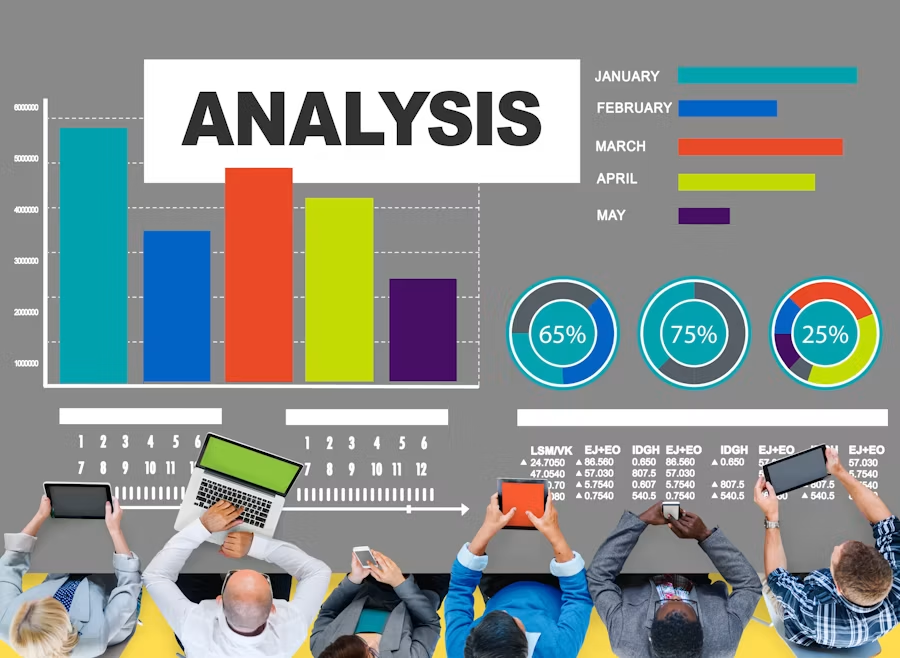
For any CEO, CFO, or Operations Manager, making accurate strategic decisions requires instant access to cross-departmental analytics. When your company's data is scattered across multiple uncooperative platforms, generating a comprehensive, real-time overview of organizational performance becomes nearly impossible. Key metrics like true customer acquisition cost, exact cost of goods sold (COGS), net profit margins per product line, and precise asset turnover ratios remain frustratingly out of reach.
Instead of relying on live, interactive dashboards, executives are forced to make decisions based on retrospective reports that are often weeks out of date by the time they are compiled. For instance, a retail enterprise expanding across East Africa might fail to recognize that a particular product category is underperforming in specific regional stores because the sales data from the retail outlets hasn't been consolidated with the central purchasing accounts.
Operating without real-time insights turns strategic planning into a guessing game. Businesses risk over-investing in slow-moving inventory, missing sudden shifts in consumer demand, or misallocating capital to unprofitable business units. Without a unified business management software platform to aggregate data continuously, leaders lack the clear market visibility needed to navigate changing economic conditions confidently.
Escalating Software Licensing, Maintenance, and IT Overheads
From a financial perspective, maintaining a fragmented software ecosystem is remarkably expensive. Every standalone application carries its own cost structure, including recurring user licenses, mandatory support contracts, upgrade fees, and implementation costs. When you add up the individual costs of separate applications for accounting, HR, CRM, and warehouse management, the total monthly or annual spend often far exceeds the cost of a comprehensive, integrated system.
Beyond direct software licensing fees, the technical debt of managing multiple platforms strains internal IT resources. To make disparate systems communicate, organizations often build custom API integrations. These custom links are highly fragile; a routine update to one software package can instantly break the connection, disrupting workflows and requiring expensive emergency developer interventions to repair.
Additionally, your internal IT team or external consultants must manage separate user provisioning policies, oversee multiple data backup schedules, and train employees across several completely different user interfaces. This constant tech maintenance diverts valuable IT attention away from core business innovations and technical optimization, locking your IT budget into a cycle of simply keeping broken systems afloat.

Fragmented Customer Experiences and Operational Friction
The ultimate victim of a fragmented internal software environment is always the customer. When front-line customer service agents, account managers, and logistics staff do not share a single, unified view of customer interactions, service quality plummets. A customer calling a logistics provider to check the status of a delayed shipment should not be placed on hold while the agent hunts through an isolated transport system, checks a separate warehouse database, and calls the finance desk to see if the invoice was cleared.
In a dynamic market where consumer expectations are shaped by rapid digital services, operational friction drives customers directly to competitors. Fragmented systems cause delayed order fulfillment, incorrect billing, missed service commitments, and redundant communications where customers must repeat their issues to multiple departments.
Deploying a comprehensive warehouse management system Kenya or retail ERP Kenya resolves these friction points by ensuring every single customer touchpoint—from the initial marketing email and sales quote to delivery tracking and final invoicing—is recorded in one central ledger. This seamless data flow empowers your team to deliver fast, highly personalized, and frictionless customer experiences that build long-term brand loyalty.
Consolidating with Odoo ERP: The Unified Path Forward
To eliminate these hidden costs and remove operational friction, forward-thinking Kenyan enterprises are turning to Odoo ERP Kenya. Designed as a modular yet fully integrated suite of business applications, Odoo replaces your scattered patchwork of software with a single, comprehensive database. Whether you need accounting, manufacturing, inventory control, CRM, human resources, or e-commerce, Odoo provides natively integrated modules that share information instantly and seamlessly.
When an order is completed via your Odoo POS or e-commerce platform, inventory levels adjust automatically across all warehouses, financial ledgers update in real time, and supplier reordering triggers instantly if stock drops below a specified threshold. This level of automation eliminates manual data entry, prevents costly operational blind spots, lowers overall software licensing costs, and delivers a consistent, high-quality experience to your customers. Whether you require an ERP implementation for manufacturing or an omni-channel setup for retail, Odoo scales alongside your business.
Conclusion
Transitioning from a fragmented software ecosystem to an integrated ERP system requires careful planning and deep technical expertise. As a trusted Odoo Partner Kenya, Magnolia Technology Solutions specializes in guiding enterprises through successful ERP implementation journeys. We analyze your unique operational workflows, configure Odoo to match your specific industry needs, manage secure data migrations, and provide comprehensive training to ensure high team adoption.
Stop paying the hidden tax of fragmented business systems and empower your business to operate as a single, cohesive unit. Contact Magnolia Technology Solutions today for a personalized Odoo ERP demonstration and discover how a unified platform can optimize operations and accelerate your long-term business growth.