Why Odoo Implementations Fail in Manufacturing -- And How to Fix Them
When a manufacturing plant in Kenya decides to transition to Odoo, the promises are always captivating. Executive teams envision real-time inventory visibility across floor operations, automated bill of materials tracking, seamless cost accounting, and effortless shop floor control. Odoo boasts one of the most versatile, cost-effective enterprise platforms on the market today. Yet, all too often, months after going live, operational leadership finds themselves stranded with a system that creates more friction than clarity. Plant managers revert to manual spreadsheets, inventory counts remain wildly inaccurate, and production leads struggle to calculate true unit margins. The failure, however, rarely lies within the core capabilities of the software itself. It stems almost entirely from how the system was configured, deployed, and aligned with actual operational realities on the factory floor.
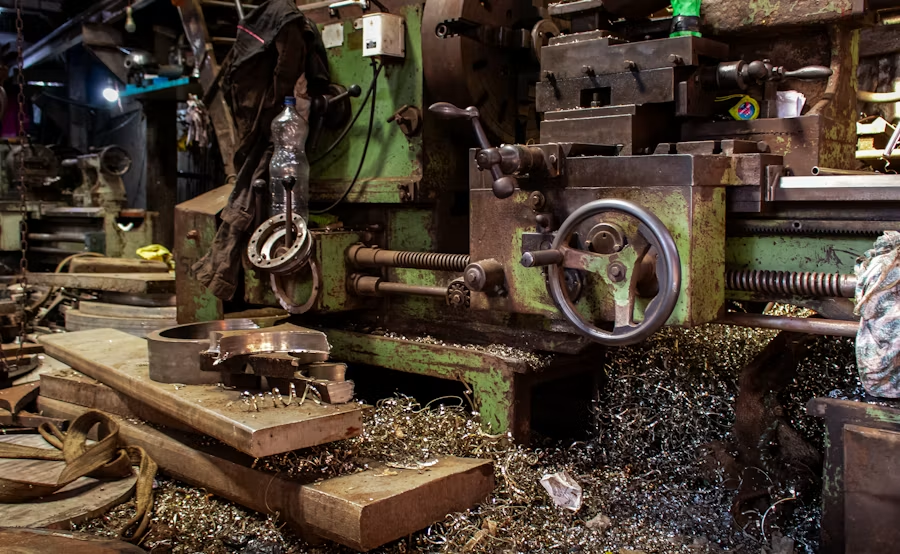
The Disconnect Between Generic Software Setup and Factory Floor Operations
The primary catalyst behind failed Odoo deployments in production facilities is a fundamental misunderstanding of manufacturing processes by standard software integrators. Generalist IT partners often treat a complex factory environment the same way they treat a retail store or a basic trading business. They set up standard sales modules, surface-level inventory counts, and basic purchase orders without accounting for the intricate nuances of local production workflows. Manufacturing in East Africa operates under distinct operational dynamics, including multi-tier bills of materials, continuous machine utilization constraints, shifting scrap rates, scrap management, and yield variations across batch runs. When a system integrator configures Odoo straight out of the box without tailoring work centers, routings, and material allocation logic to match how goods actually move through your plant, immediate bottlenecks occur. Shop floor teams find the software burdensome, leading to bypassed digital controls and missing transaction data. A system is only as valuable as the accuracy of the data entered by the workers on the line, and when software configurations ignore daily operational realities, total adoption collapses.

Flawed Cost Accounting and Inventory Misalignment Disruption
Another major point of failure during Odoo rollouts lies in the misconfiguration of inventory tracking and valuation mechanics. In a fast-moving production or FMCG environment, materials continuously change form, transfer locations, and absorb operational overhead. Integrators with purely technical backgrounds frequently miss the critical interplay between standard manufacturing operations and landed cost calculations, work-in-progress valuation, and automatic inventory movements. When raw material consumption is not accurately recorded in real time, inventory records diverge sharply from physical stock in the warehouse. Operations directors end up facing stockouts on vital packaging or raw inputs despite the ERP reporting adequate stock, while finance leaders cannot determine true product margins due to inaccurate absorption of direct labor and overhead costs. When operational managers cannot trust the stock numbers or cost calculations within their core ERP platform, they inevitably rebuild parallel tracking systems using Excel spreadsheets. The moment key personnel abandon the ERP to run operations through disconnected manual logs, the entire implementation effectively fails, leaving the business paying for software that adds administrative burden rather than driving operational efficiency.

Transforming Broken Deployments Through Operational Re-engineering
Rescuing a struggling Odoo system requires moving away from pure software adjustments toward an approach rooted in deep manufacturing experience. Fixing a stalled setup begins with a detailed operational audit of the factory floor, mapping every raw material movement, staging area, assembly stage, and quality check against your existing digital workflows. Rather than forcing factory teams to adapt to an unnatural, out-of-the-box configuration, the system must be re-engineered to reflect physical operations. This involves recalibrating multi-level bills of materials, aligning multi-warehouse transit points, establishing automated scrap tracking, and configuring real-time shop floor interfaces that workers can update seamlessly during shifts. Effective recovery also centers heavily on practical user enablement tailored to local operational staff. When machine operators, inventory clerks, and production planners clearly understand how their simple daily entries drive overall plant efficiency and supply chain visibility, user adoption transforms from a forced obligation into a natural operational habit.

Partnering with Local Manufacturing Specialists to Build It Right
The ultimate safeguard against implementation failure is choosing an implementation team that understands manufacturing as deeply as they understand software architecture. Magnolia Technology Solutions stands out as Kenya’s premier certified Odoo partner, specializing specifically in rescuing, re-architecting, and optimizing complex ERP implementations for production and FMCG businesses. We recognize that software alone never fixes a factory floor; success requires a local team that understands East African supply chain dynamics, regional regulatory compliance, and practical operational challenges. Our team brings years of direct experience auditing stalled installations, rectifying broken data structures, and deploying custom-fitted manufacturing modules that deliver true cost visibility and inventory precision. We do not just hand over a system and leave; we partner with your operations leads to ensure sustained system health, high shop floor adoption, and ongoing support long after launch. When your enterprise platform is configured right from the start, it transforms from an administrative burden into your company's greatest competitive driver.
Is your current Odoo setup failing to deliver real visibility on your shop floor? Do not let a poorly configured ERP slow down your production operations. Book a free review with our local manufacturing specialists today.